

REQUEST AN APPOINTMENT
LET'S CONNECT NOW
Schedule your no obligation consultation by fill out the form below.

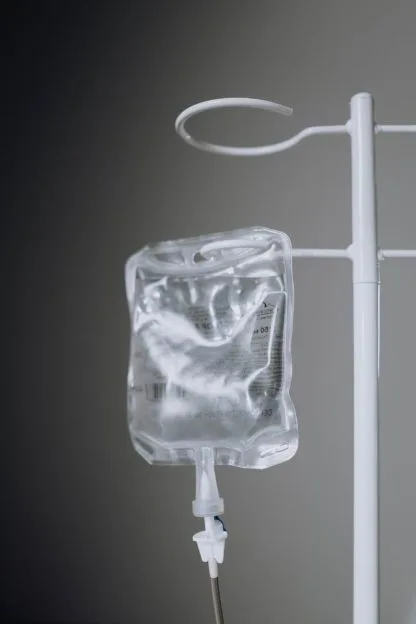
IV drip therapy has become increasingly popular in wellness and aesthetic clinics, with people seeking treatments for hydration, nutritional support, recovery and overall wellbeing. But what exactly happens at an IV drip bar, and is it suitable for everyone?
In simple terms: An IV drip bar is a clinical setting where fluids and, when appropriate, selected vitamins, minerals or other prescribed ingredients are delivered directly into a vein through an intravenous (IV) line. Because the treatment enters the bloodstream directly, it should be provided following an appropriate medical assessment and by trained healthcare professionals.
An IV drip bar is a clinic or wellness setting where people can receive intravenous therapy. A small catheter is placed into a vein, usually in the arm, and connected to a bag containing a selected fluid or treatment formulation.
Unlike tablets or drinks, an IV delivers its contents directly into the bloodstream. IV fluids have long been used in conventional medical care for situations such as significant dehydration and when a person cannot adequately take fluids by mouth. Wellness IV services have expanded this concept to include selected vitamin and nutrient formulations.
However, direct delivery does not automatically mean that an IV treatment is necessary or more beneficial than oral nutrition or hydration for a healthy person. Evidence for many of the broad wellness claims associated with vitamin infusions remains limited.
Your health history, current concerns, medications and suitability for IV therapy should be reviewed.
A trained healthcare professional places a small IV catheter into a suitable vein, usually in the arm.
The selected fluid or formulation is delivered gradually through the IV line.
The treatment should be monitored by appropriately trained staff, with the infusion adjusted or stopped if necessary.
The contents of an IV depend on the purpose of treatment and the individual's clinical needs. Depending on the service, an infusion may contain fluids and selected electrolytes, vitamins or other nutrients.
Important: More ingredients do not necessarily mean a better treatment. IV formulations should be selected based on an individual's circumstances rather than simply choosing the largest combination of vitamins or nutrients.
IV therapy is not something everyone needs. However, selected individuals may discuss it with a qualified healthcare professional when there is a reasonable clinical or wellness-related indication.
People who are significantly dehydrated may sometimes require intravenous fluids, particularly when drinking enough fluid is difficult or inadequate.
People with a documented nutritional deficiency or specific medical need may require targeted nutritional support. The appropriate approach depends on the underlying cause.
In selected situations involving fluid loss, an IV may provide a rapid route for fluid replacement. Healthy people who can drink adequately generally do not require IV hydration simply because they exercised.
Some people explore IV wellness treatments as part of a broader health or aesthetic routine. Expectations should be realistic, as evidence for many general wellness and cosmetic claims is still limited.
Wellness clinics may offer different IV formulations for different goals. Common reasons people ask about IV therapy include:
It is important to distinguish between a treatment being marketed for a particular benefit and having strong clinical evidence that it produces that benefit. Current evidence does not support treating IV vitamin therapy as a universal solution for fatigue, immunity, anti-aging or other general wellness concerns.
Some IV services are marketed for skin hydration, glow or antioxidant support. However, these claims should not be confused with proven treatments for specific skin conditions. Healthy skin depends on multiple factors, including nutrition, hydration, sun protection, sleep and appropriate dermatological care. An IV drip should not replace evidence-based treatment for pigmentation, acne, hair loss or other skin conditions.
IV therapy is an invasive procedure because a catheter is inserted into a vein. When appropriately selected and administered by trained professionals, IV fluids are commonly used in medical care. Nevertheless, IV treatment is not completely risk-free.
| Potential issue | What it can involve |
|---|---|
| Injection-site irritation | Bruising, discomfort, swelling or irritation around the IV site. |
| Infection | Any procedure involving a vein carries a potential infection risk if appropriate sterile technique is not followed. |
| Fluid overload | Excessive or inappropriate fluid administration can be problematic, particularly in people with certain heart or kidney conditions. |
| Nutrient excess | High doses of certain vitamins or minerals may cause toxicity or other unwanted effects. |
| Medication interactions | Some ingredients may interact with medicines or may not be appropriate for particular medical conditions. |
Certain people may need additional assessment or may not be suitable candidates for elective IV therapy. Speak with your doctor before treatment if you have significant medical conditions or take regular medications.
This does not mean that every person in these groups can never receive IV therapy. Rather, the potential benefits, risks, fluid volume and ingredients should be assessed individually by an appropriate healthcare professional.
| IV Therapy | Oral Hydration |
|---|---|
| Delivers fluid directly into a vein | Fluid is consumed normally and absorbed through the digestive system |
| Useful when IV administration is clinically appropriate | Generally sufficient for everyday hydration when a person can drink normally |
| Requires a needle/catheter and trained administration | Non-invasive and convenient |
| Carries procedure-related risks | Generally carries fewer risks for healthy individuals |
For most healthy people who can drink normally, everyday hydration does not require an IV. IV fluids are particularly useful when there is a medical reason that makes intravenous administration appropriate.
The duration varies depending on the type and volume of the infusion. Many elective IV sessions may take around 30 minutes to an hour, although the exact time can vary. Your healthcare provider should determine the infusion rate and monitor you during treatment.
If you are considering IV therapy in Hyderabad, the most important step is choosing a clinic that takes a medical, personalised approach rather than treating IV drips as a one-size-fits-all wellness solution.
At Inform Clinics, the Inform Drip Bar offers IV therapy as part of its wellness and aesthetic services. The appropriate treatment can be discussed with the clinical team based on your individual goals, health history and suitability.
Find out whether IV therapy is appropriate for your individual needs before choosing a formulation.
Book a ConsultationAn IV drip bar is a clinical or wellness setting where intravenous fluids and, when appropriate, selected nutrients or other ingredients are administered through an IV line.
The basic IV delivery method is similar, but the purpose can differ. Hospitals use IVs for many established medical indications, while wellness clinics may offer elective hydration or nutrient formulations.
People with a specific medical indication, significant dehydration or certain nutritional needs may benefit from IV therapy. Some healthy individuals also seek elective wellness infusions, although evidence for broad wellness benefits remains limited.
Some IV products are marketed for energy and fatigue. However, tiredness can have many causes, and there is limited evidence that IV vitamin therapy provides a general energy boost in otherwise healthy people. Persistent fatigue should be evaluated for its underlying cause.
Some IV treatments are marketed for skin hydration or glow, but evidence for broad cosmetic benefits is limited. IV therapy should not replace appropriate skincare, sun protection or treatment of an underlying skin condition.
IV therapy can be performed safely when appropriately selected and administered by trained professionals, but it is not risk-free. Possible problems include bruising, infection, fluid overload, nutrient toxicity and medication interactions.
No. Suitability depends on your health, medications, fluid requirements and the ingredients being considered. People with certain heart or kidney conditions, pregnancy and other medical circumstances may require additional assessment.
The duration depends on the formulation and infusion volume. Many elective sessions take approximately 30 minutes to an hour, but your individual treatment time may differ.
Medical Disclaimer: This article is intended for general educational purposes and does not replace an individual medical consultation. IV therapy is not appropriate for everyone, and the potential benefits, ingredients, dosage and risks should be assessed by a qualified healthcare professional. Individual results and experiences may vary.


