REQUEST AN APPOINTMENT
LET'S CONNECT NOW
Schedule your no obligation consultation by fill out the form below.

Hair spa or medical treatment? Understand what each approach can do for your hair and scalp, and when hair fall may need a dermatologist's attention.
A relaxing hair spa can leave your hair feeling softer, smoother and more manageable. But if you are experiencing persistent hair fall, thinning, bald patches or scalp problems, a hair spa is very different from a medical hair treatment.
The two are often confused because both are described as "hair treatments." However, their goals, methods and expected results are quite different. Understanding that difference can help you choose the right approach for your concern.
A hair spa is primarily a cosmetic and conditioning treatment, while medical hair treatments are designed to diagnose and manage underlying hair or scalp conditions. A hair spa may improve the feel and appearance of the hair, but it should not be considered a treatment for medical causes of hair loss.
A hair spa is generally a cosmetic hair-care routine involving steps such as cleansing, conditioning, massage and application of hair products. The exact process varies between salons and treatments.
It can be useful when the main concern is dryness, rough texture, frizz or lack of manageability. The benefits are primarily focused on the hair shaft rather than diagnosing or treating the biological causes of hair loss.
Can leave dry or rough hair feeling softer and smoother. May improve manageability and the cosmetic appearance of the hair. The massage component can make a hair spa a relaxing self-care experience.
A hair spa may make your hair feel healthier, but it does not generally treat the underlying medical causes of hair loss.
Hair fall can have many causes, including hereditary hair loss, nutritional deficiencies, hormonal changes, certain illnesses, scalp conditions, stress and some medications. Treating the cause requires identifying what is actually responsible for the hair loss.
Hair can look fuller or feel smoother after conditioning, but that is not the same as stimulating new hair growth. If you are noticing persistent shedding or progressive thinning, consider a professional assessment instead of relying only on cosmetic treatments.
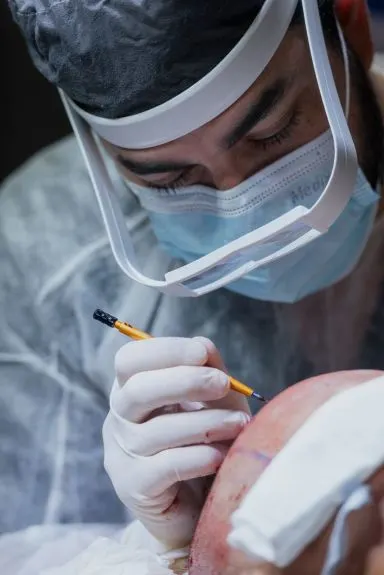
Medical hair treatments begin with identifying the likely cause of a patient's hair or scalp problem. A dermatologist may examine the scalp, assess the pattern of hair loss and, when appropriate, recommend investigations or other diagnostic steps.
Treatment is then selected according to the diagnosis. Depending on the condition, this may involve topical or oral medication, procedures, scalp treatments or other evidence-based approaches.
The pattern and possible causes of hair loss are evaluated. Treatment is selected according to the individual's condition. Response to treatment can be monitored and adjusted when needed.
Occasional shedding is normal. However, certain changes can indicate that it is worth seeing a dermatologist.
You notice significantly more shedding than usual. Your hair density appears to be gradually decreasing. You develop clearly defined areas of hair loss. Persistent itching, scaling, redness or inflammation accompanies hair loss.
The treatment depends entirely on the diagnosis. Some commonly used approaches may include:
In many cases, cosmetic hair care and medical treatment can coexist. A hair spa may be used for conditioning and cosmetic maintenance while a dermatologist addresses an underlying hair or scalp condition.
However, if your scalp is inflamed, irritated or undergoing a procedure, it is important to ask your treating professional before using salon products or undergoing vigorous scalp massage.
Primarily supports the cosmetic appearance, softness and manageability of the hair. Addresses an identified hair or scalp condition and its underlying cause. "A hair spa can cure hair fall." Hair spa treatments may improve the feel of the hair but do not generally address medical causes of hair loss. "Hair spas can improve hair appearance." Conditioning treatments may make hair feel smoother, softer and easier to manage. "A good hair spa can regrow thinning hair." Improving hair texture is not the same as stimulating new hair growth. "Persistent hair loss deserves evaluation." Finding the cause early can help determine which treatment options are appropriate.
A hair spa may improve the feel and appearance of your hair, but it does not generally treat the underlying cause of persistent hair fall. If shedding continues, a dermatologist can help determine the cause.
A hair spa can improve conditioning and manageability, but there is not enough basis to consider it a treatment for stimulating significant new hair growth.
Consider a dermatological assessment if you have persistent or increasing hair fall, progressive thinning, bald patches, scalp inflammation or other unusual changes.
It may be possible, but it depends on your scalp condition and treatment. If your scalp is irritated or you have recently undergone a procedure, ask your treating dermatologist before having a hair spa.
If the concern is genuine hair thinning or hair loss, medical assessment is the more appropriate starting point. A hair spa may improve hair texture but does not replace diagnosis and treatment of hair loss.
If your hair loss is persistent, increasing or accompanied by scalp symptoms, a professional assessment can help identify the cause and guide you toward an appropriate treatment plan.
Hair Spa vs Medical Hair Treatments: What's the Difference?
Quick Answer
Hair Spa vs Medical Hair Treatments at a Glance
Feature
Hair Spa
Medical Hair Treatment
Main Goal
Conditioning and improving hair appearance
Diagnosing and treating hair/scalp concerns
Provider
Usually salon professionals
Dermatologist or qualified medical professional
Hair Fall
Does not treat the underlying cause
Can address specific causes of hair loss
Scalp Conditions
May provide temporary comfort
Can be medically assessed and treated
Hair Texture
Can temporarily improve softness and manageability
Treatment depends on the underlying concern
Diagnosis
Generally not performed
Medical assessment may be required
What Is a Hair Spa?
Conditioning
Hair Texture
Relaxation
Can a Hair Spa Stop Hair Fall?
Don't Confuse Temporary Hair Feel With Hair Regrowth
What Are Medical Hair Treatments?
Diagnosis
Personalized Plan
Progress Monitoring
When Does Hair Loss Need Medical Attention?
Increasing Hair Fall
Hair Thinning
Bald Patches
Scalp Symptoms
Examples of Medical Hair Treatments
Approach
May Be Considered For
Topical Treatments
Certain types of hair loss or scalp conditions
Oral Medication
Selected hair and scalp conditions when medically appropriate
Growth-Boosting Procedures
Certain types of hair thinning depending on diagnosis
Scalp Treatments
Selected scalp conditions and concerns
Hair Transplant
Selected cases of permanent hair loss after assessment
Can You Have a Hair Spa Alongside Medical Treatment?
Think of Them as Different Roles
Hair Spa
Medical Treatment
Which One Do You Need?
Your Main Concern
More Appropriate Starting Point
Dry, Rough Hair
Hair spa / conditioning-focused hair care
Frizz & Poor Manageability
Hair care and conditioning
Persistent Hair Fall
Dermatological evaluation
Progressive Hair Thinning
Medical hair assessment
Bald Patches
Dermatologist evaluation
Scalp Itching / Scaling
Scalp assessment and appropriate treatment
Common Myths About Hair Spas
Myth
Fact
Myth
Fact
Frequently Asked Questions
Is a hair spa good for hair fall?
Can a hair spa make hair grow faster?
When should I see a dermatologist for hair loss?
Can I get a hair spa while undergoing medical hair treatment?
What is better for thinning hair: a hair spa or medical treatment?
Concerned About Hair Fall or Thinning?
REQUEST AN APPOINTMENT
Schedule your no obligation consultation by fill out the form below.


