
REQUEST AN APPOINTMENT
LET'S CONNECT NOW
Schedule your no obligation consultation by fill out the form below.

Dermatology & Skincare Guide
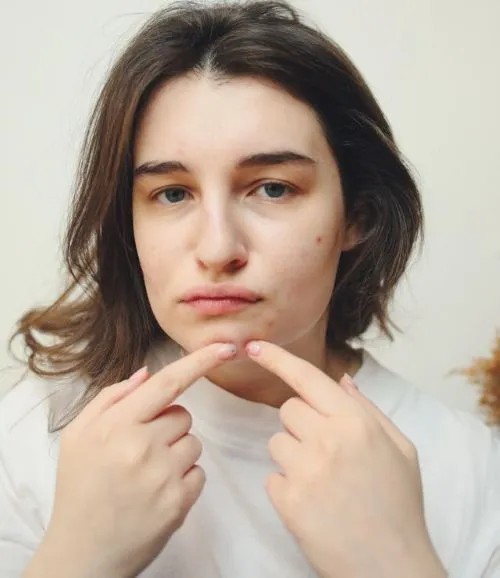
Recurring pimples around your chin and jawline are often associated with hormonal acne. But hormones are not the only possible explanation. From clogged pores and skincare products to friction and shaving, several factors can contribute to breakouts in this area.
Do you repeatedly notice pimples around your chin, lower cheeks or jawline? Perhaps they appear just before your period, take a long time to settle or seem to return in exactly the same areas.
Chin and jawline acne is commonly associated with hormonal changes, particularly in adults. However, the location of a breakout alone cannot confirm that hormones are responsible. Ordinary acne, irritating skincare products, friction, hair-removal practices and even other skin conditions can produce similar-looking bumps.
Understanding what is triggering your breakouts is important because the right treatment depends on the cause, severity and type of acne.
No. Chin and jawline acne is not always hormonal. Hormonal fluctuations can contribute, especially when breakouts are recurring or linked to menstrual cycles. However, clogged pores, unsuitable skincare, friction, shaving and other conditions can also cause acne-like bumps. A dermatologist can help identify the actual cause.
Acne develops when hair follicles become blocked with excess oil (sebum) and dead skin cells. Inflammation and the activity of acne-associated bacteria can then contribute to pimples, pustules and deeper lesions.
The chin and jawline contain oil-producing glands, just like other parts of the face. Breakouts in this region may be influenced by:
It is also possible to have more than one trigger at the same time. For example, someone with hormonally influenced acne may experience additional irritation from an unsuitable moisturiser or frequent shaving.
Hormones are an important factor in acne, but not every breakout around the lower face is caused by a hormonal imbalance.
Hormonal fluctuations can stimulate the sebaceous glands to produce more oil. This may contribute to clogged pores and inflammation, leading to recurring acne.
Some patterns that may suggest a hormonal influence include:
These patterns can provide useful clues, but they do not establish a diagnosis by themselves.
Polycystic ovary syndrome (PCOS) is one condition that can be associated with hormonal acne. Some people with PCOS have increased androgen activity, which can stimulate oil production and contribute to persistent breakouts.
Acne may be one of several possible signs. Other features that may warrant medical assessment include:
Having chin acne does not mean you have PCOS. A diagnosis requires an appropriate medical assessment, and acne alone is not enough to confirm the condition.
If your breakouts are not primarily hormonal, another trigger may be responsible. Here are some common possibilities.
Heavy creams, oily cosmetics and products that clog pores may contribute to breakouts, especially when used repeatedly.
Masks, helmet straps, chin guards and repeated rubbing can irritate the skin and contribute to acne-like breakouts.
Shaving, waxing and plucking can irritate follicles. Ingrown hairs or folliculitis may resemble acne.
Stress may worsen existing acne in some people through changes in the body's hormonal and inflammatory responses.
Some medicines can trigger or worsen acne-like eruptions. Discuss new or persistent breakouts with your prescribing clinician.
A family history of acne may increase the likelihood of developing persistent or adult-onset acne.
There is considerable overlap between different forms of acne. However, certain patterns can help a dermatologist understand what may be contributing to your breakouts.
| Feature | Possible hormonal pattern | Other acne patterns |
|---|---|---|
| Common location | Often lower face, chin and jawline | May affect forehead, nose, cheeks, chin, chest or back |
| Timing | May flare around menstrual cycles | May occur without a predictable cycle |
| Pimple type | May include deeper, tender inflammatory lesions | May include blackheads, whiteheads and inflamed pimples |
| Possible triggers | Hormonal fluctuations and androgen activity | Clogged pores, products, friction and other factors |
| Treatment approach | May include acne medication and, in selected cases, hormonal treatment | Depends on the acne type, severity and contributing factors |
Important: These are general patterns, not diagnostic rules. Hormonal acne can also include blackheads and whiteheads, and non-hormonal acne can appear on the jawline.
The best treatment depends on whether you have mild clogged pores, inflammatory pimples, deeper painful acne or a hormonal pattern. A dermatologist may recommend a combination of treatments rather than relying on one product.
Topical treatments are often used for mild to moderate acne and may also form part of a plan for more persistent breakouts.
Helps reduce acne-associated bacteria and inflammation. It can cause dryness and irritation and may bleach fabrics.
Help unclog pores and reduce the formation of new comedones. Examples include adapalene and prescription retinoids.
Helps exfoliate inside pores and may be useful for blackheads, whiteheads and some mild breakouts.
Can help with acne and the dark marks that remain after pimples have healed.
Not every active ingredient is suitable for every skin type. Using several strong products together can irritate the skin and make the problem worse. A dermatologist can recommend the right combination and frequency.
If breakouts are widespread, painful, persistent or causing scars, topical products alone may not be sufficient.
Depending on the diagnosis, a dermatologist may consider:
These are prescription treatments, not self-medication options. Some acne medicines have important precautions, including pregnancy-related risks. Tell your dermatologist if you are pregnant, breastfeeding, trying to conceive or taking other medication.
Some procedures may be considered as supportive treatments for particular acne concerns, but they do not replace appropriate acne medication when active acne is present.
For patients with active acne, controlling new breakouts is usually the priority before focusing on cosmetic procedures for marks or scars.
Not every small bump around the chin or mouth is acne. Some skin conditions can look similar but require different treatment.
If your breakouts are itchy, burning, unusually uniform, concentrated around the mouth or not responding to typical acne treatment, seek a dermatologist's assessment rather than repeatedly changing acne products.
A consistent, gentle routine can support acne treatment and reduce avoidable irritation.
Wash your face gently, generally twice daily and after sweating. Avoid aggressive scrubbing.
Look for non-comedogenic or oil-free moisturisers, sunscreens and makeup where possible.
Squeezing and picking can worsen inflammation and increase the risk of scars and dark marks.
Use broad-spectrum SPF 30 or higher to help protect skin and reduce the worsening of post-acne dark marks.
Give an appropriate acne routine time to work. Frequent product switching can irritate the skin.
Note when breakouts appear, any menstrual-cycle pattern, new products and other possible triggers.
Occasional pimples may settle with a suitable basic skincare routine. However, recurring or painful acne deserves attention, particularly if it is affecting your confidence or leaving marks.
Consider booking a dermatology consultation if:
Early assessment can help prevent avoidable scarring and identify whether the problem needs routine acne treatment, hormonal evaluation or a different approach altogether.
Treating acne effectively starts with understanding why it is happening. At Inform Clinics, a dermatology consultation can help assess your breakouts and identify suitable treatment options based on your skin and medical history.
Book a Dermatology ConsultationNo. Hormonal changes can contribute to chin acne, but clogged pores, skincare products, friction, shaving and other factors may also cause breakouts. The location alone cannot confirm the cause.
Recurring jawline pimples may be associated with hormonal fluctuations, adult acne, clogged pores or irritation. If they repeatedly appear around your menstrual cycle or are deep and painful, a dermatologist can assess whether hormones are contributing.
No. Chin acne alone does not indicate PCOS. If it occurs alongside irregular periods, increased facial hair or other symptoms of hormonal imbalance, discuss the possibility of PCOS with a qualified doctor.
Hormonal fluctuations around menstruation can influence oil production and contribute to acne flare-ups in some people. Keeping track of the timing of your breakouts can help your dermatologist identify a possible pattern.
Yes. Certain heavy or pore-clogging products may contribute to breakouts. Consider non-comedogenic products and review any new skincare, makeup or hair products introduced before the acne started.
Stress may worsen existing acne in some individuals. It is one possible contributing factor, but persistent breakouts usually need a broader assessment rather than assuming stress is the only cause.
Acne treatment generally takes several weeks to show improvement. Some people need a longer treatment period or adjustments to their routine. Follow your dermatologist's instructions rather than stopping treatment too early.
Hormonal acne can often be controlled effectively, but recurrence is possible, particularly when the underlying hormonal influences continue. Long-term treatment or maintenance skincare may be needed.
No. Picking or squeezing pimples can worsen inflammation, introduce infection and increase the risk of scarring or dark marks. A dermatologist can recommend safer ways to manage inflamed lesions.
Seek a dermatologist's advice if acne is persistent, painful, deep, scarring or affecting your confidence. You should also seek assessment if breakouts occur with symptoms such as irregular periods or increased facial hair.
Chin and jawline acne is commonly associated with hormonal changes, but it is not always hormonal. Skincare products, clogged pores, friction, shaving and other conditions can also contribute to breakouts in this area.
Rather than assuming every lower-face breakout is caused by hormones, pay attention to its timing, appearance and associated symptoms. A dermatologist can identify the likely cause and recommend a treatment plan that addresses your particular type of acne.


